Next on my journey was Kyushu! I boarded the train with two of my traveling companions and we headed toward the city of Beppu located in Oita prefecture. The area is famous for the geothermal activity there which has created an onsen mecca. Beppu has a total of nine geothermal hotspots which create the many hot springs in the area and when one looks over the city it is covered with steam coming from the local onsen.
While there we entered several different onsens together, but perhaps the most memorable was the Beppu Onsen where one can enter into a natural mud bath. It was quite the experience. We were also sure to try the popular steam vent cooked eggs which could be found at any of the local hot springs. The sunny weather made for an enjoyable walk from onsen to onsen, however, the pleasant feature of hot springs is that even when the weather is cold, they make for a great destination, so be sure to make a trip to Beppu for a relaxing time.


From Beppu I boarded a train and headed to Hakata, in Fukuoka Prefecture. Arriving at night the amount of time we spent in Fukuoka was limited, however, the area is famous for its ramen so we found a local street ramen stand, which are now quite rare, and decided to sit and eat. The stand itself sat maybe a total of ten people and upon entering one could tell it was a local hotspot and the six others who were already eating there soon introduced themselves, all local businessmen. The conversation started and before we knew it we were all laughing and taking pictures with the cook. The atmosphere of the ramen stand was one that has remained unchanged for hundreds of years, it is a place where people come to talk, eat, and laugh late into the night.


From Hakata we headed to Hiroshima by train. On the way we stopped at Iwakuni in Yamaguchi prefecture, in order to see the famous Kintai Bridge. The bridge was first built in 1673 and serves crossing over the Nishiki River. The bridge is famous for its unique style of five arching sections created using exquisite joint work and craftmanship. High above the bridge Iwayuki Castle, built in 1601 by Kikkawa Hiroie, stands atop Mt. Yokoyama and overlooks the river valley. After the construction of the castle was completed, bridges had continually been built and washed away by the river when it flooded. As a result the unique design of the Kintai Bridge was developed and built in 1673 by the third lord of the area Kikkawa Horoyoshi. It is supported by four stone pillars supporting the central sections and a wooden pier on each side connecting to the bank.
The bridge, while thought to be indestructible by flood, was washed away the next year. It was then rebuilt once more after redesigning the stone piers for strength and creating a tax that would support the maintenance of the bridge, consisting of a reconstruction of the sections on intervals of 20 and 40 years. Over the course of over 200 years its construction used only wood joints, mortise and tendon joints to be specific, and metal belts to hold the bridge sections together. This maintenance continued until WWII.
In 1950 a typhoon that struck the area washed the bridge away, despite efforts made by local citizens during the typhoon to protect the bridge from the rising water. In 1951 the reconstruction of the bridge was started and follows the original design, however nails were used in order to increase the bridge's strength. The structure was then restored in 2001 and 2004. The bridge spans 175 meters and is approximately 5 meters in width. It is an amazing sight to see and walking across it while viewing the beautiful surrounding mountains makes a trip here well worth while.


After arriving in Hiroshima we took a ferry to the island of Itsukushima, also known as Miyajima, where the famous Itsukushima Shrine appears to be floating in the water. The shrine was first built in 593 and then rebuilt in 1168, it was named a UNESCO World Heritage site in 1996. It is most famous for its red tori, or gate, that stands out in the water in front of the island shrine. The island's natural state has been preserved as there are few towns that have been built on the island, aside from the private homes of local residents that live nearby the shrine. The island is famous for its forests of maple trees and the vibrant colors of the changing leaves in the fall. As the island is considered sacred residents work hard to preserve the nature surrounding the shrine, timber cutting is prohibited and while walking the shrine one can see deer roaming freely in the area. The history itself of the island is incredible. Perhaps a familiar story is that of the Battle of Miyajima, a historic illustration of military tactics. The historic story of the battle can be read here:
Battle of Miyajima. For a detailed history, and more pictures of the shrine please visit the following link:
Miyajima Information.


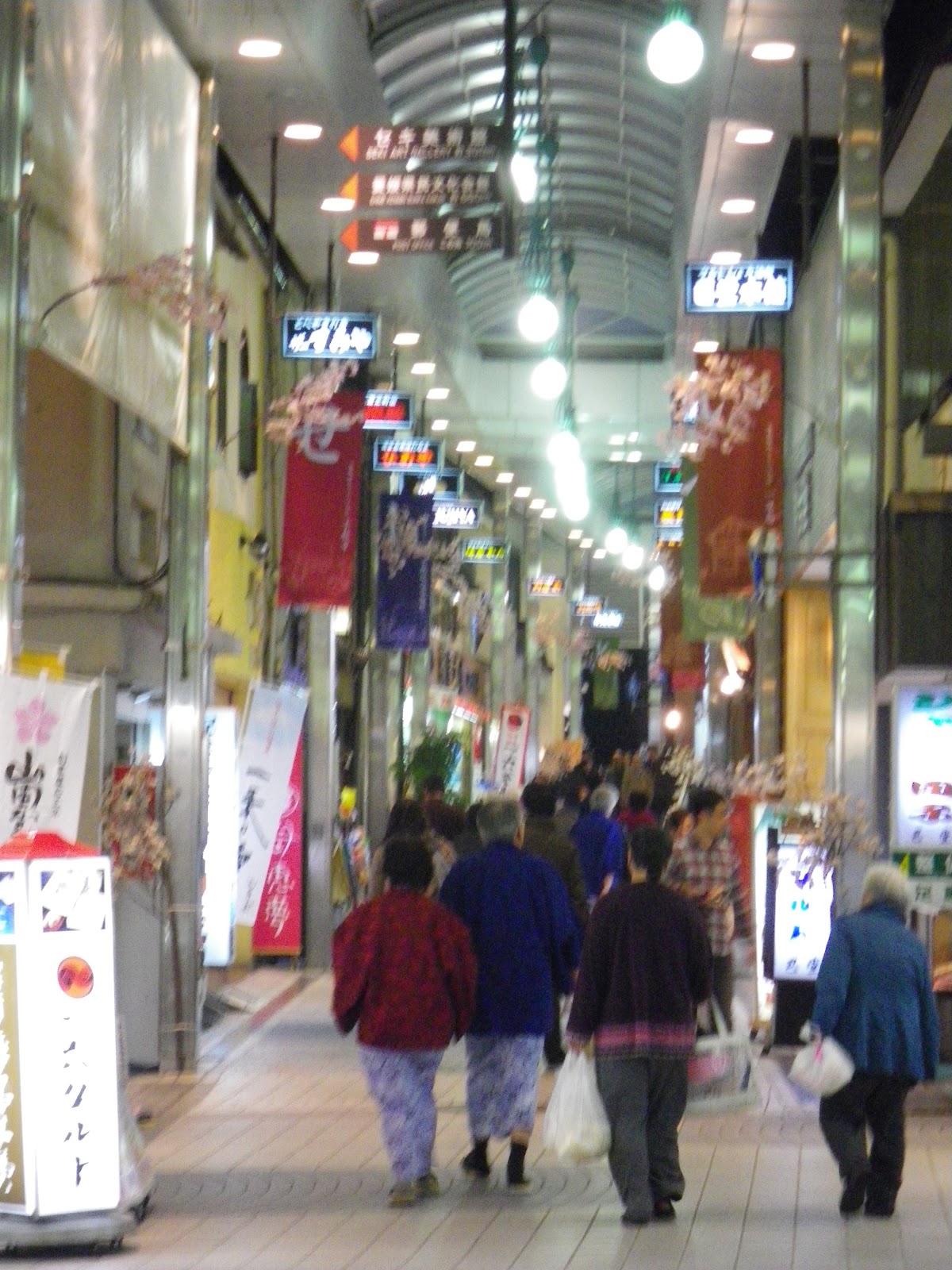
After spending the night in the city we got up and headed to the town of Matsuyama on the island of Shikoku. Matsuyama is a town that has a variety of things to see, including the Matsuyama Castle and famous Dogo Onsen.
Dogo Onsen is a popular tourist attraction for many Japanese as it is one of the oldest onsen in Japan. The hot springs at Dogo have history of nearly 1000 years and includes visits from famous haiku poets. The current building was built in 1894 and includes what a building called the Yushinden, built in 1899 that houses the bath for the Imperial family. The town's quite atmosphere makes for a relaxing stay. Wandering the nearby market one can see many guests dressed in their shikata coming from the onsen to buy some of the renown mikan, or madarin oranges, of the area.


The following day I headed toward Matsuyama Castle perched high above the town and surrounded by immense stone walls. Matsuyama Castle was originally built in 1603 by Kato Yoshiaki and originally included 5 stories and 5 roofs. However, in 1784 the main hall was struck by lightning and destroyed by the fire. The castle's reconstruction began in 1820 and was finished in 1854. The castle was damaged during World War II, and was repaired again. The castle itself today is still an impressive sight to behold, standing on top of the hill over looking the surrounding city valley. The castle's best view is seen from a bird's eye, so if you are interested in seeing the immense scale of the castle grounds check out the following link:
Matsuyamajo Information.
On our way out to head to one more stop at the Sakamoto Ryoma Museum near Hirome we stopped to eat some sushi, and it is here is where I will end my account of my Spring Break journey.
Below is a photographed account of me eating, for my first time, "涙すし", that is teardrop sushi, or to be exact, a sushi roll compromised of nearly all wasabee.
It was an unforgettable trip filled with friends, new experiences, learning, and enough servings of wasabee for the rest of the year.
ジェフより